
"coffee plant biology"
500 article(s) found

Introduction to the flavor and taste characteristics of Costa Rican coffee manor
The topography of Costa Rica is that the coast is surrounded by plains, while the middle is cut off by rugged mountains. The country declared 200 nautical miles in its exclusive economic zone and 12 nautical miles in its territorial sea. The climate is tropical and subtropical, and there is also part of the new tropical Costa Rica, which accounts for only 0.03% of the world's land area, but has nearly 4% of the world's species, making it the country with the richest biological species in the world.

Basic knowledge of coffee types of coffee
Coffee is called coffea in the biological genus. The genus is a member of the Rubiaceae family. It has more than 500 species and more than 6000 species, most of which are tropical trees and shrubs. From the point of view of drinkers, coffee trees can be roughly divided into five types, of which Arabica and Robusta are more common. Arabica species account for 70% of the world's total output.

Coffee drinking healthy life caffeic acid can effectively inhibit colitis
Recently, researchers have found that the increased expression of a cellular respiratory enzyme (CYP4B1) is an important indicator that caffeic acid can inhibit colitis in mice. Caffeic acid is an anti-inflammatory antioxidant commonly found in food. The findings are published in the June 2009 issue of Experimental Biology and Medicine. CYP4B1 is a cellular respiratory enzyme that has been reported in other models.

What are the types of coffee beans?
Coffee belongs to the genus Coffea. The genus is a member of the Rubiaceae family, which has more than 500 species and more than 6000 varieties, most of which are tropical trees and shrubs. From the perspective of drinkers, coffee trees can be roughly divided into 5 species, of which Arabica and Robusta are more common. Arabica species account for more than 70% of the world's total production.

What kind of coffee beans have the best flavor? Arabica beans have the characteristics of weak scholars with outstanding ability.
Professional coffee knowledge exchange more coffee bean information please follow the coffee workshop (Wechat official account cafe_style) front street-Arabica variety introduction according to biology, we are divided into Arabica (Arabica), Robusta (Robusta) and Liberica (Arabica). The output of Libby card is very small, and it is hardly used for commercial use, so let's not introduce it for a while.

Brief introduction of Galapagos Coffee San Cristobal Manor planting Flavor
When looking for information, I was deeply attracted by the beautiful scenery of the Galapagos Islands. Scientists have verified that there are more than 700 kinds of ground animals, more than 80 species of birds and many insects living on the island. Darwin visited the island. I got the insight from it and created the Theory of Evolution. On this island, known as the living Museum of Biological Evolution and showroom, we can

Introduction to the flavor and taste of the bright and fragrant Costa Rican Saint Roman Coffee Manor.
The topography of Costa Rica is that the coast is surrounded by plains, while the middle is cut off by rugged mountains. The country declared 200 nautical miles in its exclusive economic zone and 12 nautical miles in its territorial sea. The climate is tropical and subtropical, and there is also part of the new tropical Costa Rica, which accounts for only 0.03% of the world's land area, but has nearly 4% of the world's species, making it the country with the richest biological species in the world.

Introduction to the planting technology of coffee the planting conditions and distribution of coffee
Coffee planting conditions and distribution 1. What is coffee? Coffee (Coffee) is derived from the Latin word Coffea (biological word name) and belongs to a member of the Rubiaceae family. These plants are all woody plants, most of which are distributed in the tropics, with more than 500 classifications and about 6000 varieties. Most of the Coffea plants are tropical 5-6 meters high.
Why does the coffee taste sour? The acidity of coffee
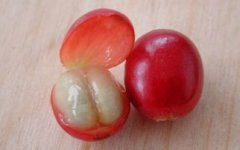
Many people simply do not know that coffee is originally like this, just like a cherry. The seeds in the red flesh are treated as raw coffee beans. At this time, coffee is green, like the seeds of ordinary plants. It has to be roasted before it becomes brown and black, becoming the coffee beans sold on the market. Students who have studied biology will know that the purpose of the flesh itself is

The taste is rich and high quality, and the flavor and taste characteristics of coffee in coffee manor are introduced.
Costa Rica accounts for only 0.03% of the world's land area, but with nearly 4% of the world's species, Costa Rica is one of the countries with the richest biological species in the world. 26% of the land area is a national park or nature reserve, including 11 wetlands, 2 biological reserves and 3 World Natural Heritage sites. The national forest coverage rate is 52%. Natural resources include iron, manganese, mercury, bauxite,

Mengdingshan Tea Exchange Panzhihua Coffee planting Base completed
On May 6, the completion and unveiling ceremony of Panzhihua Coffee planting Base of Mengdingshan Tea Exchange was solemnly held in Panzhihua Banpo Coffee planting Base. Qiu Xiaoping, director of Panzhihua Municipal Bureau of Agriculture and Animal Husbandry, Zhang Tianhui, deputy director of the standing Committee of Eastern District people's Congress, Zhou Wenjing, deputy director of Eastern District Agriculture and Water Bureau, Yang Bo, vice president of Tea Exchange, Wu Xin, general manager of coffee bean business, Jiang Hao, deputy general manager, Panzhihua City.

Basic knowledge of fine coffee about the type of coffee
Coffee belongs to the genus Coffea. The genus is a member of the Rubiaceae family, which has more than 500 species and more than 6000 varieties, most of which are tropical trees and shrubs. From the perspective of drinkers, coffee trees can be roughly divided into 5 species, of which Arabica and Robusta are more common. Arabica species account for more than 70% of the world's total production.
Do you know what kinds of fine coffee are there?
Coffee is called coffea in the biological genus. This genus is a member of the Rubiaceae family. It has more than 500 species and more than 6000 varieties, most of which are tropical trees and shrubs. From the point of view of drinkers, coffee trees can be roughly divided into five species, of which Arabica and Robusta are more common. Arabica species account for more than 70% of the world's total output.

Introduction to the varieties of taste and flavor in the producing area of Saint Roman Coffee Manor in Costa Rica
Costa Rica accounts for only 0.03% of the world's land area, but with nearly 4% of the world's species, Costa Rica is one of the countries with the richest biological species in the world. 26% of the land area is a national park or nature reserve, including 11 wetlands, 2 biological reserves and 3 World Natural Heritage sites. The national forest coverage rate is 52%. Natural resources include iron, manganese, mercury, bauxite,

Planting conditions and distribution of coffee
What is coffee? Coffee (Coffee) is derived from the Latin word Coffea (biological word name) and belongs to a member of the Rubiaceae family. These plants are all woody plants, most of which are distributed in the tropics, with more than 500 classifications and about 6000 varieties. Most of the Coffea plants are tropical evergreen shrubs 5-6 meters high, and some can grow to more than 10 meters high.
Galapagos Islands, a coffee producer in South America
In South America, which is famous as the host country, more than 900 kilometers off the west coast of Ecuador, near the equator with 90 degrees west longitude, there are a group of islands hanging in the vast Pacific Ocean, that is, the Galapagos Islands, also known as Cologne Island. It can be said that the Galapagos Islands of Ecuador is one of the loneliest and most beautiful islands in the world, which is called a unique living biological evolution treasure.
The Galapagos Islands, a coffee producer in South America
In South America, which is famous as the host country, more than 900 kilometers off the west coast of Ecuador, near the equator with 90 degrees west longitude, there are a group of islands hanging in the vast Pacific Ocean, that is, the Galapagos Islands, also known as Cologne Island. It can be said that the Galapagos Islands of Ecuador is one of the loneliest and most beautiful islands in the world, which is called a unique living biological evolution treasure.
Galapagos Islands Galapagos Islands
In South America, which is famous as the host country, more than 900 kilometers off the west coast of Ecuador, near the equator with 90 degrees west longitude, there are a group of islands hanging in the vast Pacific Ocean, that is, the Galapagos Islands, also known as Cologne Island. It can be said that the Galapagos Islands of Ecuador is one of the loneliest and most beautiful islands in the world, which is called a unique living biological evolution treasure.

Coffee knowledge | effect of altitude on coffee | the higher the altitude, the better the coffee?
Like wine, beer and tea, the way coffee beans grow can greatly affect the taste of the cup you end up drinking. There are many factors that affect the quality of coffee beans, but none is more important than the growth of coffee beans. To understand why altitude has such a great effect on the flavor of coffee beans, we must study plant biology in depth. Usually, the higher the altitude,

What is organic coffee? Is there any advantage in drinking organic coffee? Flavor characteristics of Organic Coffee
Professional coffee knowledge exchange more coffee bean information please pay attention to the coffee workshop (Wechat official account cafe_style) Organic coffee in the cultivation does not use any insecticides and other chemicals to treat pests or cultivation problems, but the use of natural methods, such as the use of natural composting, hedgerow, pruning and other methods to maintain the growth of coffee trees, in terms of pest control